The Nutrient Robbing Misconception
The nutrient-redistribution question
Ocean iron fertilisation in the Southern Ocean could change the amount and timing of macronutrient transport to downstream upwelling systems. Biological uptake, remineralisation and circulation redistribute nutrients across regions and timescales. The direction and magnitude of any downstream effect depend on location, scale, duration and circulation pathways and therefore require modelling and measurement.
Ocean circulation and nutrient regeneration
Deep-ocean nutrient storage and surface supply
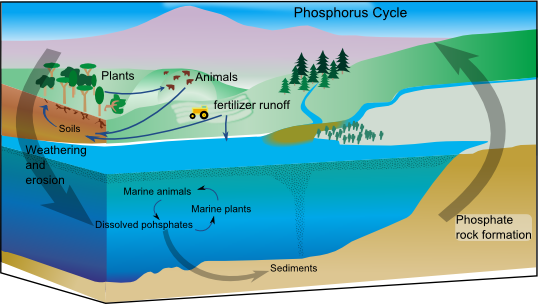
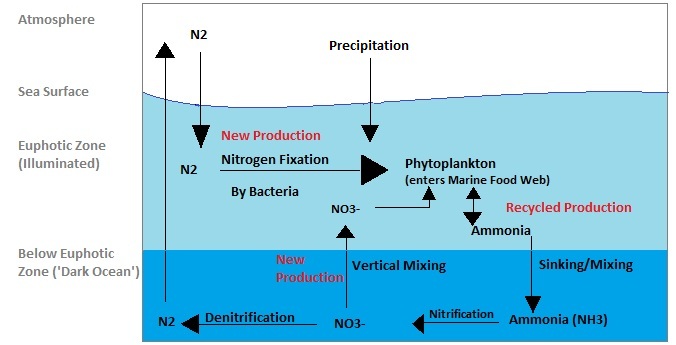
Deep waters store much of the ocean’s macronutrient inventory. Remineralisation of sinking organic matter returns nitrate (NO₃⁻), phosphate (PO₄³⁻) and dissolved silica (Si(OH)₄) to the water column.
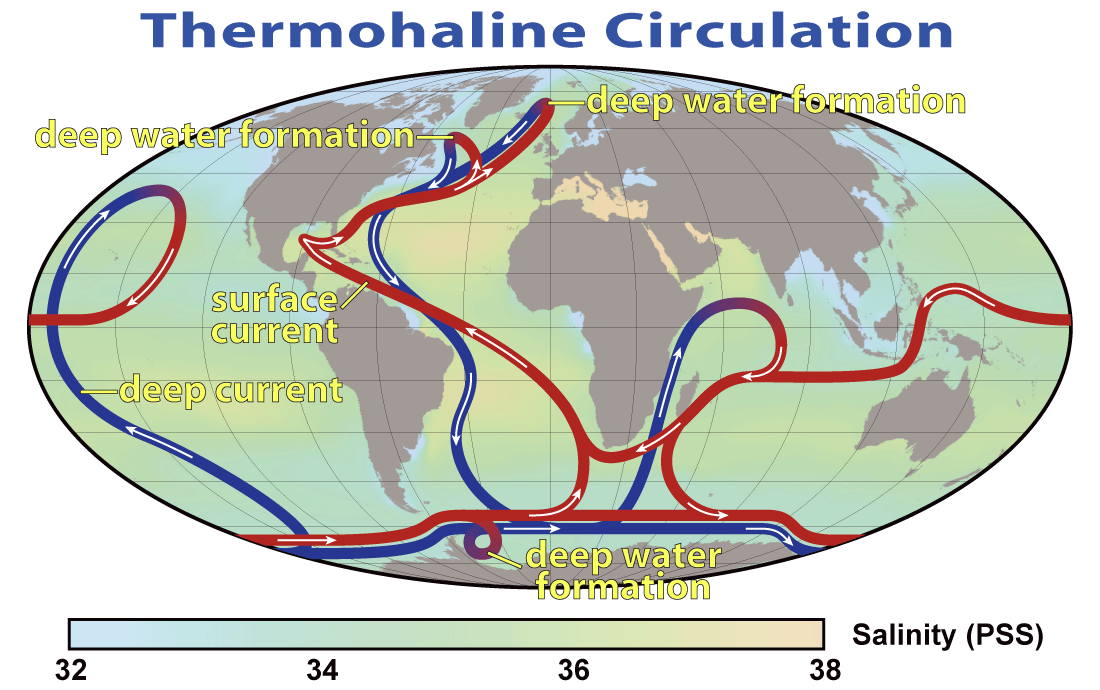
Upwelling and mixing return nutrients to the sunlit layer through equatorial divergence, high-latitude wind-driven upwelling and coastal eastern-boundary systems.
Major deep and intermediate water masses
North Atlantic Deep Water (NADW): Forms in the North Atlantic and sinks southward, carrying oxygen and relatively low “preformed” nutrients.
Antarctic system:
Antarctic Bottom Water (AABW): Very dense, formed mainly in the Weddell and Ross sectors; it ventilates abyssal oceans.
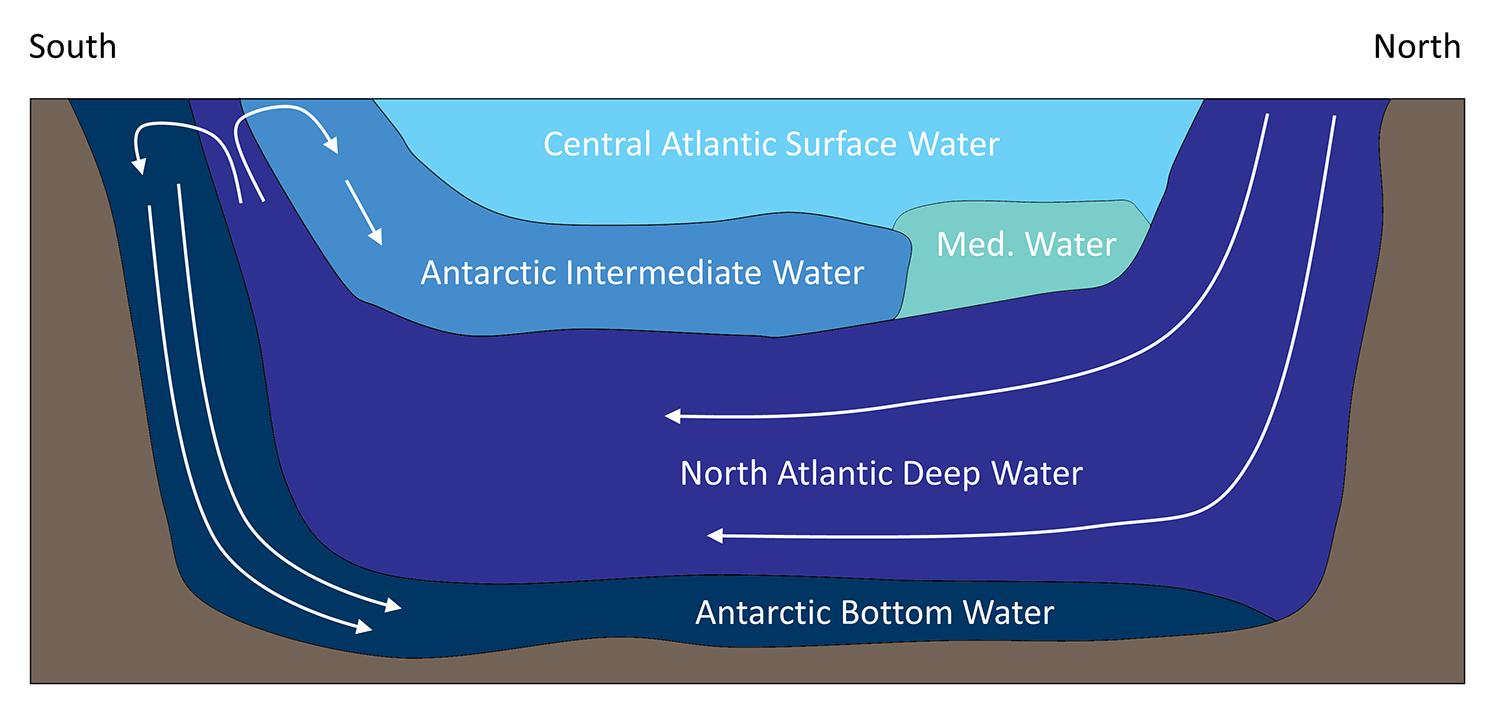
Antarctic Intermediate Water (AAIW): Forms on the northern rim of the Antarctic Circumpolar Current (ACC), subducts beneath warmer subtropical waters, and spreads northward into all basins.
Nitrate regeneration across the overturning circulation
Remineralisation generally increases nitrate concentrations as water masses age along the overturning circulation; magnitude varies by water mass, location, depth, season and dataset.
Southern Ocean nutrient distributions and pathways
HNLC logic (High-Nutrient, Low-Chlorophyll)
The Subantarctic and Antarctic zones of the Southern Ocean are classic HNLC regions: macronutrients abound but iron is scarce, so phytoplankton don’t fully use nitrate and phosphate. This creates large pools of “preformed” nutrients that subduct into AAIW and travel north.
Southern Ocean nutrient retention and recycling
Because export production (sinking particles) in the Southern Ocean is substantial, a lot of organic matter remineralizes at depth and re-enters the surface south of the subtropical fronts. This can keep a latitudinal band in a state where nutrients are repeatedly cycled without being efficiently converted into long-lived biomass and carbon export—a trap in the sense that macronutrients persist unused in the surface/subsurface here compared with iron-replete regions.
Where Southern Ocean nutrients flow into non-iron-limited regions
AAIW formed around the ACC’s northern rim is the source water for:
Eastern boundary upwelling systems (EBUS): Benguela (Namibia/SW Africa) and Canary (NW Africa), plus California and Peru/Chile.
Equatorial divergence in the Pacific and Atlantic sustains continuous upwelling and high primary productivity. These downstream systems differ from the Subantarctic and Antarctic zones in iron status, nutrient demand and ventilation; their productivity and oxygen balance reflect interactions among these factors.
Nutrient loading, deoxygenation and the Benguela system
In places like the Namibian shelf (Benguela), excess nutrients drive intense blooms; as biomass sinks and decomposes in weakly ventilated waters, oxygen plummets and anoxia develops. Consequences include:
- Mass invertebrate escapes and die-offs in the Benguela system illustrate the effects of seafloor hypoxia and anoxia.
- Greenhouse gases: Anoxic/suboxic waters promote methanogenesis (CH₄) and denitrification/anammox, producing nitrous oxide (N₂O)—both far more potent than CO₂ per molecule.
- Food web stress: Fish and invertebrates are compressed into thin oxygenated layers; recruitment and habitat quality suffer.
Downstream nutrient, oxygen and greenhouse-gas effects must be modelled and measured; direction and magnitude are site- and scale-dependent.
What OIF actually does in iron-limited waters
Triggering diatoms where they’re starved of iron
In HNLC regions, iron is the missing micronutrient. Adding small, controlled doses (e.g., iron sulfate) can unlock macronutrient use, especially by silicifying diatoms (provided silicic acid is available).
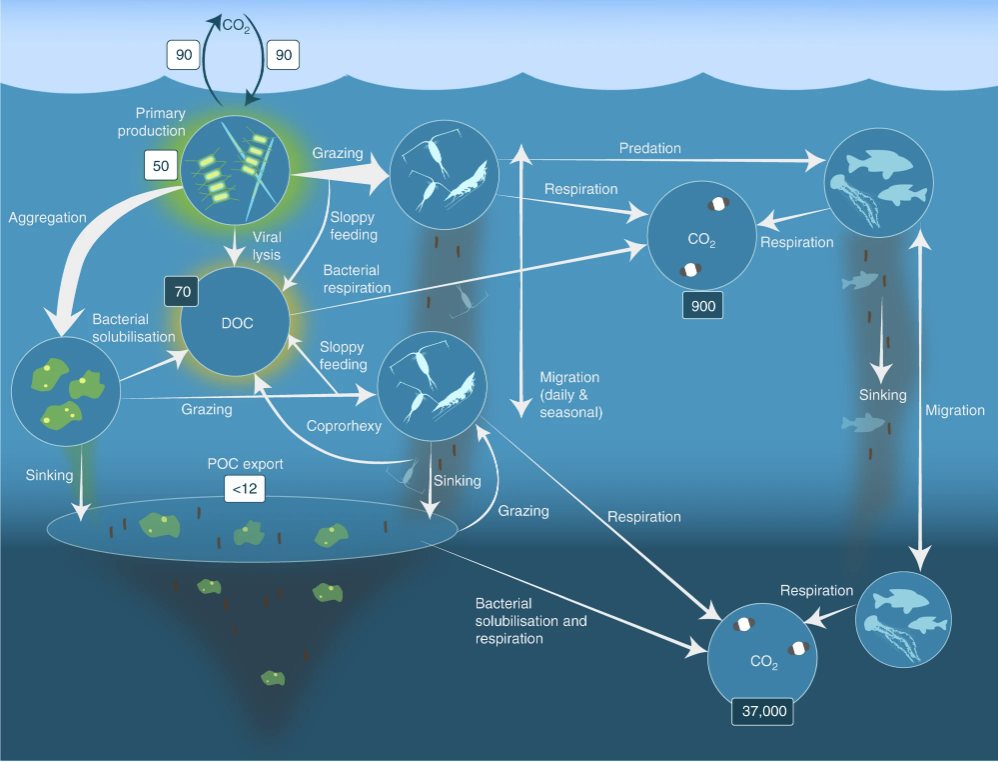
Diatoms package carbon efficiently into faster-sinking aggregates and fecal pellets, enhancing export below the winter mixed layer—reducing the chance of rapid re-ventilation.
The Redfield-plus-iron stoichiometry reality
Canonical Redfield (C:N:P ≈ 106:16:1) describes bulk needs, but Fe:C demand is tiny (μmol:mol range) and ecotype-dependent. In the Southern Ocean, Fe:N and Fe:P ratios are limiting; small Fe inputs can mobilize large N and P draws.
Silica matters: Diatoms also need Si:N ≈ 1:1 (very roughly) to build frustules; Si availability and light (day length, mixed-layer depth) co-limit bloom magnitude and timing.
Why complete nutrient depletion is physically implausible
Even with iron addition, not all nitrate/phosphate is consumed because:
- Light limitation & deep mixed layers in austral winter/spring cap growth.
- Si limitation can arrest diatom dominance before nitrate is exhausted.
- Grazing & viral lysis recycle nutrients within the surface.
- Physical export ceilings: Stratification, storms, and fronts limit bloom residence times.
Complete nutrient depletion is not achievable at scale because light, silicic acid, grazing, viral lysis, physical transport and bloom residence time constrain uptake. Remineralisation continues to alter nutrient inventories before water masses return to the surface.
Potential effects on downstream fisheries
Nutrient supply in upwelling regions
Equatorial and eastern-boundary upwelling systems support productive food webs and can also contain oxygen-minimum zones. Changes in source-water nutrients may alter productivity, oxygen and greenhouse-gas cycling; effects depend on circulation, stoichiometry, ventilation and ecosystem response.
Transfer to harvestable fish biomass
Nutrients pass through microbial and planktonic food webs, while only a fraction reaches harvestable fish biomass. Consequences for fisheries depend on species composition, trophic transfer, oxygen exposure and the timing and location of nutrient supply.
Downstream oxygen and greenhouse-gas effects
Changes in downstream nutrient supply could affect oxygen and greenhouse-gas cycling. These effects must be quantified across relevant circulation pathways and timescales.
Southern Ocean site-selection factors
Preformed-nutrient pools
The Subantarctic Zone north of the Polar Front combines chronic iron limitation, residual surface macronutrients and Antarctic Intermediate Water subduction. These properties make it a candidate setting for research on nutrient uptake, export and downstream redistribution.
Polar Front eddy fields & meanders: Natural retention enhances bloom development; diatom-friendly silica is often adequate early in the season.
Avoiding areas where nutrients already flow to non-Fe-limited sinks
Sectors where rapid isopycnal pathways couple directly and quickly to heavily utilized downstream regimes can be de-prioritized if the aim is to target surplus nutrients that would otherwise subduct unused.
Seasonality, light, and mixed-layer physics
Late winter/early spring windows (shoaling MLD, increasing light) allow efficient Fe use and export before strong stratification or silica drawdown stalls diatoms.
Site choice weighs silicic acid fields, front locations, eddies, and storm climatology to favor exportable diatom blooms over short-lived recycled spikes.
Constraints on annual diatom production
Even with steady upwelling, annual bloom potential in the Southern Ocean is capped by:
- Iron delivery (added + natural dust/ice melt + shelf inputs) and ligand chemistry (organic ligands keep Fe soluble; scavenging removes it).
- Silica inventories and Si drawdown rates (diatoms can deplete Si before NO₃⁻ is gone, flipping communities away from fast-sinking types).
- Light & mixing (deep winter MLDs dilute cells/Fe; storms re-mix and can terminate blooms).
- Top-down control (grazing, viral lysis) that redirects production into rapid remineralization rather than export.
- Physical export pathways (eddies/fronts that retain blooms long enough for aggregates to cross the “memory line”—below the winter mixed layer).
Bloom magnitude is constrained by iron availability and ligand chemistry, silicic acid, light, mixing, grazing, viral lysis and physical export pathways.
Potential downstream climate and ecosystem effects
Methane and nitrous oxide: Changes in downstream organic-matter supply could affect microbial greenhouse-gas production in oxygen-limited waters. Direction, magnitude and attribution require direct measurement.
Carbon export and storage: The duration of atmospheric isolation depends on export depth, remineralisation and circulation. These quantities require site-specific observation and modelling.
Oxygen and habitat: Potential downstream changes in oxygen exposure and habitat quality require baseline observations, transport modelling and sustained monitoring.
Deoxygenation in the Benguela system
Benguela observations illustrate that additional nutrient supply does not necessarily increase fisheries productivity once oxygen falls below ecological thresholds. Downstream nutrient, oxygen and greenhouse-gas effects must be modelled and measured; direction and magnitude are site- and scale-dependent.
Safeguards and design principles for responsible OIF
A responsible assessment of nutrient redistribution should:
- Target HNLC preformed-nutrient pools (SAZ/Polar Front) with clear Fe limitation.
- Time releases to coincide with light windows, shoaling MLD, and sufficient Si for diatoms.
- Use conservative dosing (tiny Fe:C leverage) with spatial containment (fronts/eddies) for retention.
- Instrument deeply (CTD/Chl-a/FRRf/²³⁴Th, sediment traps, zooplankton tows, O₂, CH₄, N₂O) to verify export, oxygen, and GHG outcomes.
- Track isopycnal pathways with Lagrangian floats, tracers and biogeochemical Argo observations to quantify downstream effect sizes and uncertainty.
- Stop rules: If oxygen stress or unintended signals arise, cease and reassess.
Nutrient redistribution and downstream effects
Remineralisation generally increases nitrate concentrations as water masses age along the overturning circulation; magnitude varies by water mass, location, depth, season and dataset.
OIF would alter when and where macronutrients are consumed. Consequences for downstream nutrient supply, oxygen and greenhouse-gas cycling are empirical questions.
Biological uptake in HNLC waters can redistribute nutrients between surface, deep and downstream reservoirs. Ecological and climate consequences depend on export depth, remineralisation and circulation.
Evidence required for assessment
Climate assessment requires measurements of air–sea CO₂ flux, carbon export, remineralisation depth and non-CO₂ greenhouse gases.
Ecosystem assessment requires baselines and monitoring for plankton communities, food webs, oxygen, nutrient inventories and downstream transport.
Fisheries assessment requires circulation and food-web modelling linked to observations of productivity, recruitment, species composition and oxygen exposure.
Governance assessment requires transparent hypotheses, independent review, monitoring, predefined stop conditions and reporting of uncertainty.
Research conclusion
Nutrient distributions are dynamic and shaped by biological uptake, remineralisation and circulation. Any OIF proposal must quantify local uptake and downstream effects rather than assume either depletion or climate benefit.
← Back to all misconceptions